


Renting a home or apartment in Canada offers flexibility and convenience, especially for newcomers, students, young professionals, and families navigating the housing market. However, many tenants overlook a critical safeguard: renter insurance, also known as tenant insurance or contents insurance. This comprehensive guide explores every aspect of renter insurance in Canada, from coverage details and costs to choosing the best policy and filing claims. Whether you’re a first-time renter in Toronto, Vancouver, Montreal, or a smaller city, understanding renter insurance can protect your belongings, finances, and peace of mind.
Contents
- 1 What Is Renter Insurance in Canada?
- 2 Why Do Tenants in Canada Need Renter Insurance?
- 3 What Does Renter Insurance Cover? Detailed Breakdown
- 4 What Renter Insurance Does Not Cover
- 5 Average Costs of Renter Insurance in Canada
- 6 Factors Affecting Your Premiums and How to Save
- 7 How to Choose the Right Renter Insurance Policy
- 8 Provincial Differences and Legal Considerations
- 9 How to File a Claim Successfully
- 10 Tips for Maximizing Coverage and Avoiding Pitfalls
What Is Renter Insurance in Canada?
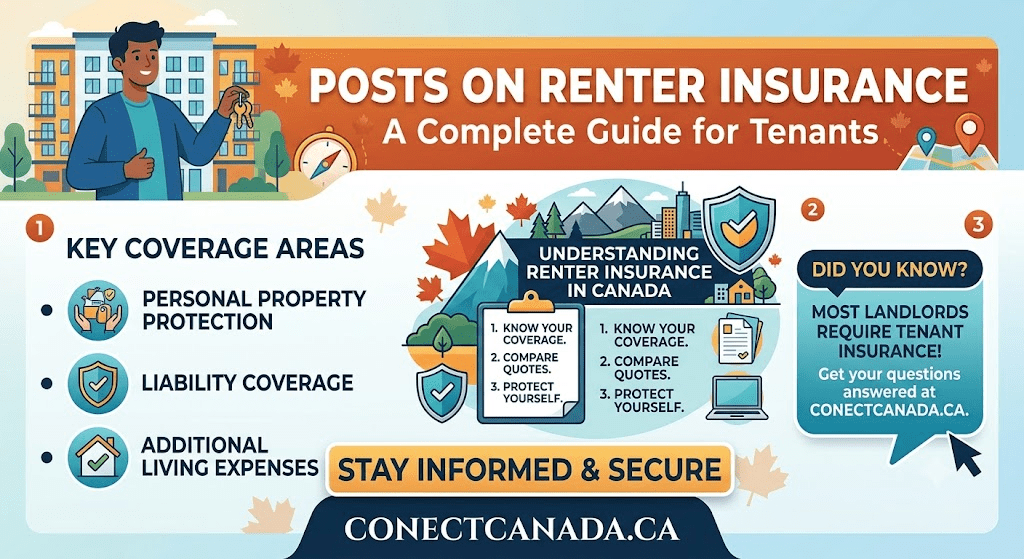
Renter insurance is a specialized policy designed exclusively for tenants. Unlike homeowners insurance, which protects the physical structure of a property, renter insurance focuses on the tenant’s personal belongings, personal liability, and temporary living expenses if the rental becomes uninhabitable.
In Canada, it is often called “tenant insurance” or “contents insurance.” It is offered by major insurers such as Intact Insurance, TD Insurance, Belairdirect, Sonnet, Duuo, and provincial providers like SGI in Saskatchewan. Policies are typically affordable and customizable, covering scenarios like theft, fire, water damage, or liability claims arising from accidents in your unit.
Key components usually include:
- Personal Property Coverage: Protection for furniture, electronics, clothing, and other belongings.
- Personal Liability Coverage: Defense against lawsuits if someone is injured in your rental or you accidentally damage others’ property.
- Additional Living Expenses (ALE): Reimbursement for hotel stays, meals, or temporary housing if you’re displaced.
Unlike the United States, where “renters insurance” is the standard term, Canadian policies often emphasize “all-risks” or “named-perils” options. All-risks covers most events unless specifically excluded, while named-perils lists covered incidents (e.g., fire, theft, and windstorm).
For newcomers to Canada via sites like conectcanada.ca, this insurance is particularly valuable. Settling in a new country means acquiring new furnishings and electronics items that aren’t cheap to replace. Landlord policies cover the building itself, not your personal items. As one expert perspective notes, tenants often wrongly assume the landlord’s coverage extends to them, leading to devastating losses.
Why Do Tenants in Canada Need Renter Insurance?
The primary argument for renter insurance is financial protection against unexpected events. Canada’s climate and urban density create unique risks: apartment fires in high-rises, basement flooding from spring thaws, wildfires in British Columbia and Alberta, and theft in busy cities.
The Case For Insurance
Consider real-world scenarios. If a neighbor’s overflowing bathtub floods your unit, destroying your laptop, furniture, and clothes, the landlord’s insurance pays for building repairs, but not your stuff. Without tenant insurance, you’re out thousands of dollars. Additional living expenses coverage can pay for a hotel while repairs are made, as highlighted in Canadian insurance discussions around evacuation orders.
Liability is another critical angle. If a guest slips on your wet floor and sues, or your pet damages a neighbor’s property, personal liability coverage (typically $1-2 million) covers legal fees and settlements. For young renters or families, this prevents personal bankruptcy.
From a broader perspective, renter insurance supports economic stability. It reduces reliance on government aid after disasters and encourages personal responsibility. Landlords often require proof of insurance in leases, making it a practical necessity for securing desirable rentals in competitive markets like Ontario and British Columbia. In Ontario, while not legally mandatory, many landlords make it a lease condition, enhancing your application strength.
Counterarguments and Balanced Views
Some tenants argue against it, claiming low personal risk or high deductibles make it unnecessary. “I live in a secure building with nothing valuable,” they say. Or, “It’s just another monthly bill.” In low-crime rural areas or for minimalist renters with few possessions, the cost-benefit might seem skewed.
However, this view underestimates cumulative risks. Statistics and insurer reports show water damage and theft as leading claims. Even “valueless” items like clothing and kitchenware add up. A counter-perspective from financial experts is that the average policy costs less than a monthly streaming subscription yet provides outsized protection, often $200-$400 annually, for tens of thousands in coverage. Skipping it is like driving without auto insurance: rare events can ruin finances.
Implications: For newcomers and students, uninsured losses can derail settlement plans or studies. Societally, widespread uptake reduces claim burdens on public systems post-disaster. Overall, the balanced consensus among Canadian insurers and advisors is that the benefits far outweigh the modest costs for nearly all tenants.
What Does Renter Insurance Cover? Detailed Breakdown
Coverage varies by policy, but standard Canadian tenant insurance includes three main pillars. Always review your policy wording (often available via insurer apps or PDFs) for specifics.
Personal Property (Contents) Coverage
This reimburses for damaged, stolen, or destroyed belongings. Options include:
Actual Cash Value (ACV): Pays depreciated amount.
Replacement Cost: Pays full new cost (preferred, slightly more expensive).
Limits typically start at $20,000-$50,000 and can be increased. Special limits apply to jewelry, cash, or collectibles (e.g., $1,000-$5,000 without riders).
Personal Liability
Covers bodily injury or property damage you cause. Essential for renters with pets, kids, or frequent guests.
Additional Living Expenses
Pays for extra costs (hotels, food, laundry) if your unit is uninhabitable due to a covered peril. Usually 20-30% of contents are limited in time (e.g., 12 months).
Here’s a comparison table of typical coverage components:
| Coverage Type | Description | Typical Limits | Common Examples Covered | Optional Add-Ons |
|---|---|---|---|---|
| Personal Property | Belongings inside/outside the unit | $20,000-$100,000+ | Fire, theft, water damage to furniture, electronics | Jewelry floater, electronics rider |
| Personal Liability | Legal costs and damages if you’re at fault | $1-2 million | Guest injury, accidental damage to others | Umbrella liability for higher limits |
| Additional Living Expenses | Temporary housing and living costs during displacement | 20-40% of contents or $5,000-$20,000 | Hotel after flood/fire, meals out | Extended period coverage |
| Optional: Earthquake/Sewer Backup | Specific Canadian risks | Varies | BC earthquakes, basement floods | Yes, recommended in high-risk areas |
| Optional: Identity Theft | Recovery costs from fraud | $5,000-$25,000 | Credit monitoring, legal fees | Yes |
Water damage is a top claim in Canada due to aging infrastructure and extreme weather. Policies often cover sudden accidental water damage but exclude gradual leaks or floods (flood insurance is separate or via government in some areas).
What Renter Insurance Does Not Cover
Understanding exclusions prevents claim denials. Common gaps include:
- Flood and Earthquake: Often excluded or require add-ons (critical in BC, Alberta, Prairies).
- Normal Wear and Tear: Depreciation from age.
- Intentional Damage or Neglect: Your fault without “sudden” cause.
- Business Equipment: Home office items may need commercial riders.
- Vehicles: Covered under auto insurance.
- High-Value Items Over Limits: Without scheduled endorsements.
- Pandemic or War: Rare standard exclusions.
A balanced analysis: Insurers design these to keep premiums low and discourage moral hazard. Counterargument: tenants in flood-prone basements face gaps highlights the need for add-ons or government programs like those in some provinces for overland flooding. Always inventory your belongings with photos and receipts to strengthen claims.
Average Costs of Renter Insurance in Canada
Renter insurance is one of the most affordable protections available. National averages hover around $20-$35 per month ($240-$420 annually), depending on location, coverage amount, and risk factors. Urban areas cost more due to higher theft and density risks.
Cost Comparison Table by Province (Approximate 2024-2025 Averages)
| Province/Territory | Average Monthly Premium | Annual Cost Range | Notes |
|---|---|---|---|
| Ontario (Toronto/GTA) | $25-$40 | $300-$480 | Higher due to density; landlord requirements common |
| British Columbia | $20-$35 | $240-$420 | Earthquake add-ons increase costs |
| Quebec | $15-$30 | $180-$360 | Competitive market; French policies available |
| Alberta | $20-$35 | $240-$420 | Wildfire risks; bundle discounts |
| Manitoba/Saskatchewan | $15-$25 | $180-$300 | Lower overall; SGI options |
| Atlantic Provinces | $15-$28 | $180-$336 | Storm risks; affordable base rates |
| Territories | $25-$40 | $300-$480 | Higher due to remote claims |
These figures draw from industry reports and broker insights; actual quotes vary. Bundling with auto insurance often yields 10-25% savings. Deductibles ($500-$1,000 typical) lower premiums if raised.
Factors influencing cost: Credit score (in some provinces), claims history, security features (alarms, deadbolts), unit type (high-rise vs. basement), and coverage level. Newcomers may pay slightly more initially without Canadian credit history, but many insurers accommodate with alternative underwriting.
Factors Affecting Your Premiums and How to Save
Location is the biggest driver; city cores cost more. Other elements:
- Coverage Amount and Type: Higher limits and replacement cost raise prices.
- Deductible: Higher deductible = lower premium.
- Claims History: Clean record discounts.
- Lifestyle: Smokers, pet owners, or frequent travelers may face adjustments.
- Discounts: Multi-policy, loyalty, student, senior, or safety device discounts (smoke/CO detectors).
Compare quotes annually via brokers or comparison sites, inventory accurately (over-insuring wastes money), improve security, and pay annually instead of monthly. Perspective: While shopping around takes time, the savings and better coverage justify it. Counter loyalty to one insurer for seamless service, but data shows switchers often win on price without service loss.
How to Choose the Right Renter Insurance Policy
Selecting wisely involves assessing needs and shopping smart.
- Inventory Your Belongings: List and value everything. Use apps or spreadsheets. Aim for 80-100% of total value.
- Assess Risks: Flood zone? High-crime area? Pets? Prioritize add-ons.
- Compare Quotes: Get 3-5 from major players. Use online tools from Intact, Sonnet (fully digital), or Duuo (popular for flexible tenant policies).
- Review Policy Details: Check perils covered, sub-limits, and exclusions. Prefer “all-risks.”
- Check Insurer Reputation: Look at claims-handling scores via J.D. Power or OmbudService (GIO Canada).
- Consider Bundling and Riders: Auto + tenant is often the best value.
Top Providers Comparison Table
| Provider | Strengths | Starting Monthly Cost | Digital Experience | Best For |
|---|---|---|---|---|
| Intact Insurance | Wide coverage, strong claims | $20 | Good | Comprehensive needs |
| TD Insurance | Bundling with banking | $18 | Excellent | TD customers |
| Sonnet | Fully online, fast quotes | $15 | Outstanding | Tech-savvy renters |
| Duuo | Flexible, short-term options | $10-20 | Excellent | Students, short leases |
| Belairdirect | Competitive pricing | $18 | Good | Budget-conscious |
| Provincial (SGI, etc.) | Local knowledge | Varies | Fair | Specific provinces |
Newcomers: Look for insurers experienced with temporary residents or those accepting foreign credit. Implications of choice: Poor selection leads to underinsurance; thorough comparison ensures value.
Provincial Differences and Legal Considerations
Insurance is provincially regulated, creating variations:
- Ontario: Not mandatory but lease-required often. Strong consumer protections via FSRA.
- Quebec: Unique Civil Code influences liability; French-language policies standard. Competitive pricing.
- BC: Earthquake and wildfire riders critical. Strata (condo) rentals have extra rules.
- Alberta/Prairies: Wildfire and hail focus; SGI public options.
- Atlantic: Storm surge considerations.
No federal mandate exists, but leases can enforce it. For international tenants, ensure the policy covers temporary residents. Balanced view: Provincial autonomy allows tailored products but complicates national moves; always re-quote when relocating.
How to File a Claim Successfully
- Ensure safety and mitigate further damage (e.g., stop water leaks).
- Document thoroughly: Photos, videos, and police report for theft.
- Contact insurer ASAP (24/7 lines common).
- Provide inventory and proof of ownership.
- Work with adjuster; keep receipts for temporary expenses.
- Appeal if denied via GIO Canada ombudsman.
Tips: Maintain an updated inventory cloud-stored. Average claim times: days for simple, weeks for complex. Perspective: Prompt filing and honesty speed payouts; exaggerated claims risk cancellation.
Tips for Maximizing Coverage and Avoiding Pitfalls
- Update policy after major purchases.
- Photograph serial numbers.
- Install smart home devices for discounts and prevention.
- Review annually.
- Educate roommates: Shared policies or individual needs?
- For short-term (Airbnb-style sublets), check exclusions.
Common myths: “Landlord covers me” (false); “Too expensive” (rarely); “Only for high-value items” (covers basics too). Debunking these empowers better decisions.
Frequently Asked Questions (FAQ’s)
Is renter insurance mandatory in Canada?
No federally, but often lease-required. Highly recommended.
How much coverage do I need?
Enough to replace all belongings plus $1M+ liability.
Does it cover my roommate’s stuff?
Usually not. Each needs their own or a joint policy.
What about storage units?
Often limited; add-ons available.
Can international students get it?
Yes, most providers accommodate.
How does it work with government disaster aid?
Insurance is primary; aid may be secondary or for the uninsured.
Renter insurance in Canada is an essential, low-cost shield for tenants. From safeguarding belongings against fire and theft to providing liability protection and living expenses during crises, it offers comprehensive peace of mind. We’ve explored the “why,” “what,” costs, choices, and nuances across provinces, weighing arguments for and against while concluding that the advantages dominate for most.
Whether you’re a newcomer building a life via resources like conectcanada.ca, a student, or a long-term renter, take action today: Inventory your items, get free quotes, and secure a policy. The small monthly investment prevents catastrophic out-of-pocket losses and supports your stability in Canada’s dynamic rental market.
Also Visit: Is Blue Cross Travel Insurance Worth It? A Complete Guide for Canadian Travelers
For more guides on settling in Canada, explore conectcanada.ca. Stay protected, stay informed.